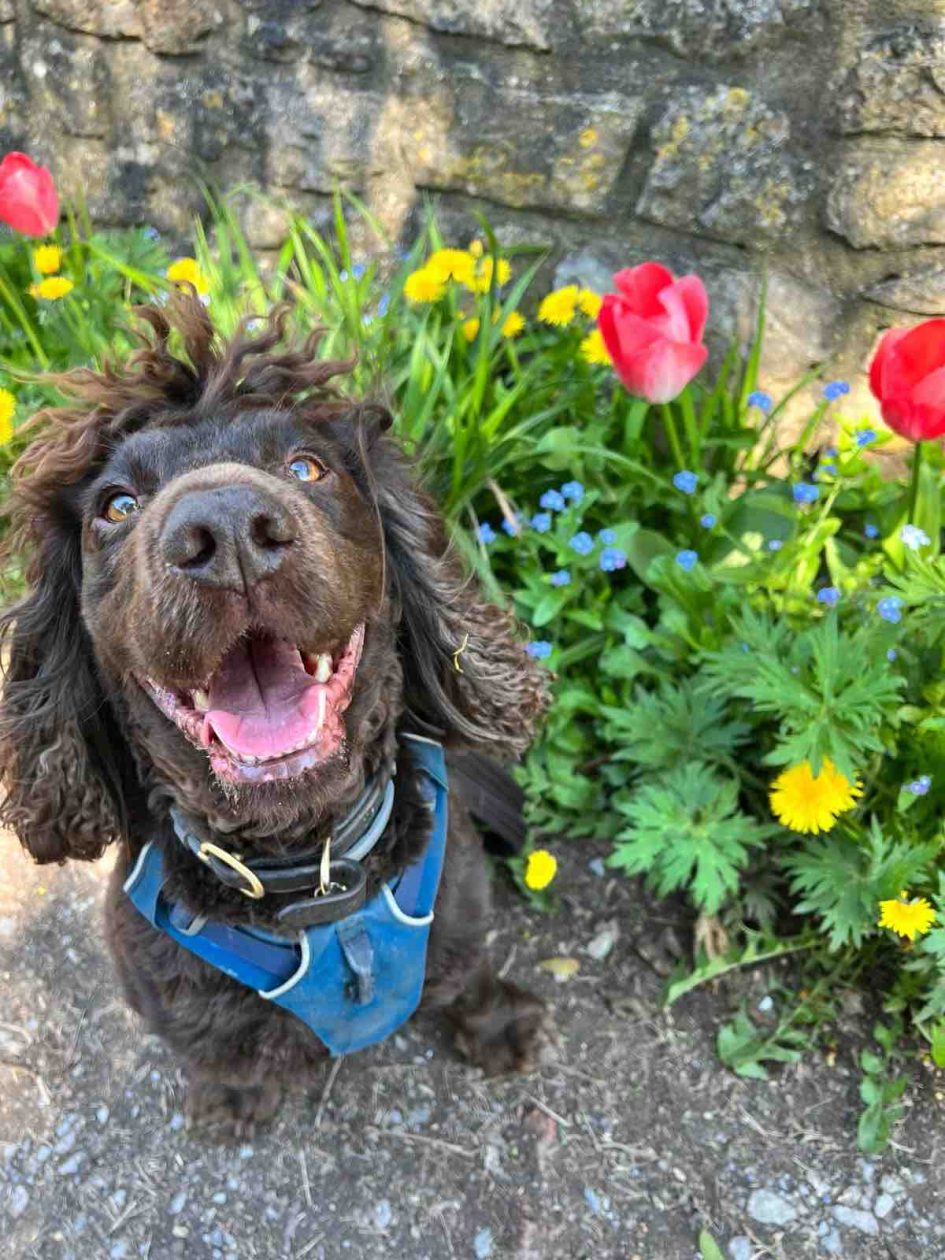
Spring is a wonderful time of year for dog walks. The days are longer, the weather is milder, and parks and countryside are full of life again. But while spring brings plenty of opportunities for outdoor fun, it also comes with a few hidden hazards for our dogs.
From seasonal allergies to parasites and toxic plants, it’s important to stay aware of the risks so you can keep your dog safe and happy on every walk.
🌼 Seasonal Allergies in Dogs
Just like us, dogs can suffer from allergies, especially in spring when pollen levels rise.
Common signs of allergies in dogs include:
- Excessive scratching or licking
- Red or irritated skin
- Watery eyes
- Sneezing or coughing
- Ear infections or head shaking
Grass, tree pollen, and flowers can all trigger reactions.
What you can do:
- Wipe your dog’s paws and coat after walks
- Avoid long grass during high pollen days
- Speak to your vet if symptoms persist
🕷️ Ticks and Fleas
Warmer weather means parasites become much more active. Ticks, in particular, are commonly found in:
- Long grass
- Wooded areas
- Heathland and countryside
Ticks can carry diseases, so it’s important to check your dog after every walk.
Top tips:
- Run your hands over your dog’s body, especially around ears, neck, and paws
- Use a tick remover tool to safely remove any you find
- Keep up to date with flea and tick prevention treatments
🌷 Toxic Spring Plants
Many common spring plants are beautiful, but dangerous to dogs if ingested.
Plants to watch out for include:
- Daffodils
- Tulips (especially the bulbs)
- Bluebells
- Hyacinths
Eating these can cause symptoms such as vomiting, diarrhoea, and in some cases more serious illness.
Stay safe by:
- Keeping an eye on what your dog is sniffing or chewing
- Avoiding areas with large amounts of these plants
- Contacting your vet immediately if you suspect ingestion
🐝 Insects and Stings
Bees, wasps, and other insects become more active in spring and curious dogs can sometimes get too close.
Signs your dog may have been stung include:
- Sudden yelping or discomfort
- Swelling (often around the face or paws)
- Licking or pawing at the area
Most stings are mild but always monitor your dog closely. Seek veterinary advice if there’s significant swelling or signs of an allergic reaction.
🌾 Grass Seeds (A Growing Risk)
As spring turns into early summer, grass seeds begin to appear and can pose a serious hazard.
These small, sharp seeds can:
- Get lodged in paws, ears, or eyes
- Work their way into the skin
- Cause pain and infection
Prevention tips:
- Avoid overgrown grassy areas
- Check paws, ears, and coat after walks
- Watch for signs like limping, head shaking, or excessive licking
🐾 Mud, Puddles & Hidden Dangers
Spring showers often mean muddy walks and plenty of puddles, but not all water is safe.
Standing water can contain:
- Bacteria
- Blue-green algae (later in the season)
- Contaminants from wildlife
Try to discourage your dog from drinking from puddles and stick to fresh water where possible.
🌿 Enjoy Spring Safely
Spring is one of the best times to get out and enjoy walks with your dog, but a little awareness goes a long way.
By keeping an eye out for seasonal hazards and taking simple precautions, you can make sure your dog stays safe, healthy, and happy.
🐶 How Friends for Pets Can Help
At Friends for Pets, your dog’s safety is always our top priority. Our experienced, caring walkers are trained to spot potential hazards and adapt walks to suit the season and your dog’s individual needs.
Whether it’s avoiding high-risk areas, checking for ticks, or ensuring safe, enriching walks, we’re here to help.
Recent Comments